A Midtown workday can make pain feel like several unrelated problems. Your neck may stiffen while you work at a computer. Your mid-back may feel tired by late afternoon. Your low back may ache after prolonged sitting, then the train ride home adds another fixed position. Those symptoms can be connected by the same daily pattern, even when they show up in different places.
Manhattan Spine Rehabilitation's existing condition pages connect computer posture with neck pain, long desk hours with mid-back strain, and prolonged sitting with low-back pain. The point is not to blame one chair or one commute. It is to understand what positions, movements, and demands keep repeating across your day.
Start With the Pattern, Not a Procedure
MSR describes its first-visit process as a consultation, health history, and examination used to determine a diagnosis and care plan. Diagnostic testing is considered when the examination shows that it is necessary. That sequence matters for office workers because occupation, lifestyle, and daily activities can shape an individualized plan.
Before an appointment, note when symptoms begin, what makes them change, and whether pain stays local or travels. Include the details that are easy to overlook: the difference between office and home-work days, how you feel after sitting on the train, and whether standing or walking changes the pattern. Bring prior imaging or test reports if you have them so the visit starts with a fuller picture.
Build a Conservative-First Care Plan
The practice describes a team model that begins with conservative care. Depending on the examination and diagnosis, that plan may draw from several services already offered under one roof:
- Chiropractic care begins with consultation, case history, physical examination, and attention to the nervous system, posture, spine, and extremities before a course of treatment is chosen.
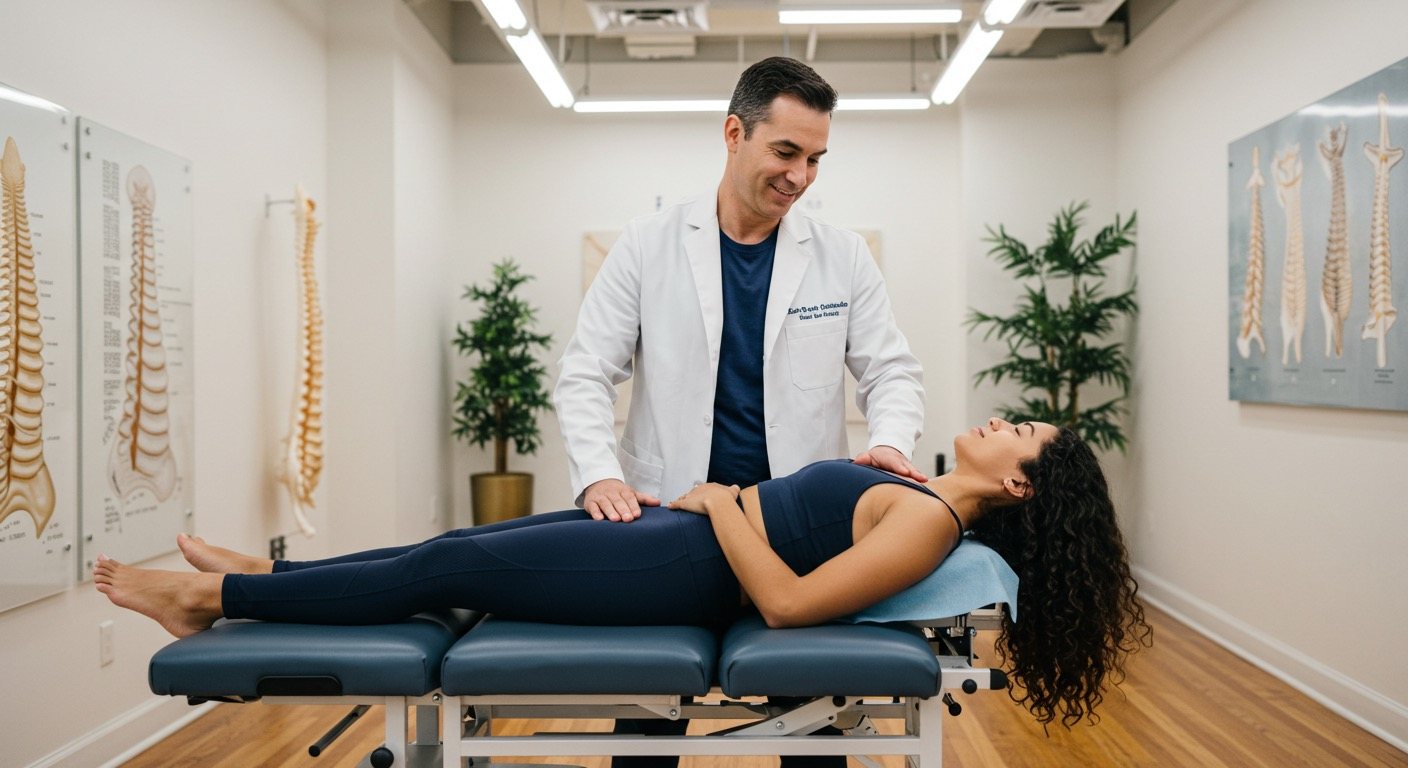
- Physical and manual therapy may include hands-on techniques, stretching restricted structures, strengthening weak muscles, soft-tissue or joint mobilization, and therapeutic exercise customized to the condition.
- Postural correction and home management can extend the plan beyond the treatment room with postural exercise, self-awareness, and a stage-appropriate home exercise program.
- Acupuncture and medical massage are also among the practice's conservative options. The massage service is directed by the diagnosed problem and a medical-team assessment rather than a spa-style routine.
Not every patient needs every service. The useful question is which parts of the plan match the diagnosed problem and which can support the next phase of movement, strength, or self-management.
Make the Workstation Part of the Plan
MSR's ergonomic services page defines ergonomics as improving the match between a person and the workspace. It calls out neutral sitting posture and adjusting the computer, phone, and keyboard to the user's reach and height.
Equipment changes are only one part of the approach. The same page advises desk workers to walk, stand, and stretch during the day to limit muscle fatigue. A care plan can therefore address both sides of the problem: what the examination finds in the clinic and what happens repeatedly at the workstation.
Plan Around a Midtown Schedule
Consistency is easier when care is close to the route you already travel. Manhattan Spine Rehabilitation has two offices near major Midtown transit hubs: 265 Madison Avenue, 2nd Floor, near Grand Central, and 38 West 32nd Street, Suite 501, near Herald Square. The practice also describes extended weekday hours for late appointments.
Choose the office that best fits the part of Manhattan you pass through most reliably. Then treat recommended visits, home exercises, and workstation changes as parts of the same plan rather than separate projects.
When a Workday Ache Deserves an Evaluation
Consider an evaluation when pain keeps returning, changes how you sit or walk, or is joined by radiating pain, numbness, or tingling. The low-back condition page notes that sciatica can include sharp pain, numbness, tingling, or pins-and-needles sensations that travel through the buttock and down the leg or foot. Symptoms with that pattern should not be reduced to “just sitting too long” without an examination.
A better plan starts by connecting the clinic findings to the real workday. For Midtown office workers and commuters, that means looking at the spine, movement, workstation, and route together—and choosing non-surgical care based on what the evaluation actually shows.
Conservative spine and pain care near Grand Central and Herald Square.