When pain is recurring, radiating, or hard to explain, the fastest path forward is often not another guess. It is a better picture of what is happening.
Back pain, neck pain, sciatica, shoulder pain, tendon irritation, and stubborn joint symptoms rarely show up with a single obvious cause. A desk worker near Grand Central may feel leg pain after a long commute. A patient near Herald Square may have shoulder pain that began as a gym issue but now flares at the keyboard. Another person may have recurring low-back pain that improves for a few days, then returns without warning.
Manhattan Spine Rehabilitation was built around a practical idea: patients should not have to bounce between multiple offices before a care plan makes sense. With locations at Herald Square and Grand Central, MSR combines chiropractic care, physical therapy, acupuncture, interventional pain management, massage therapy, and SoftWave acoustic shockwave therapy with on-site diagnostic tools when testing is clinically appropriate.
What On-Site Diagnostics Can Clarify
Not every patient needs imaging or neuro-diagnostic testing. Many common spine and joint complaints can begin with a detailed history and physical exam. But when symptoms are persistent, severe, radiating, or inconsistent, additional testing may help clarify the next step.
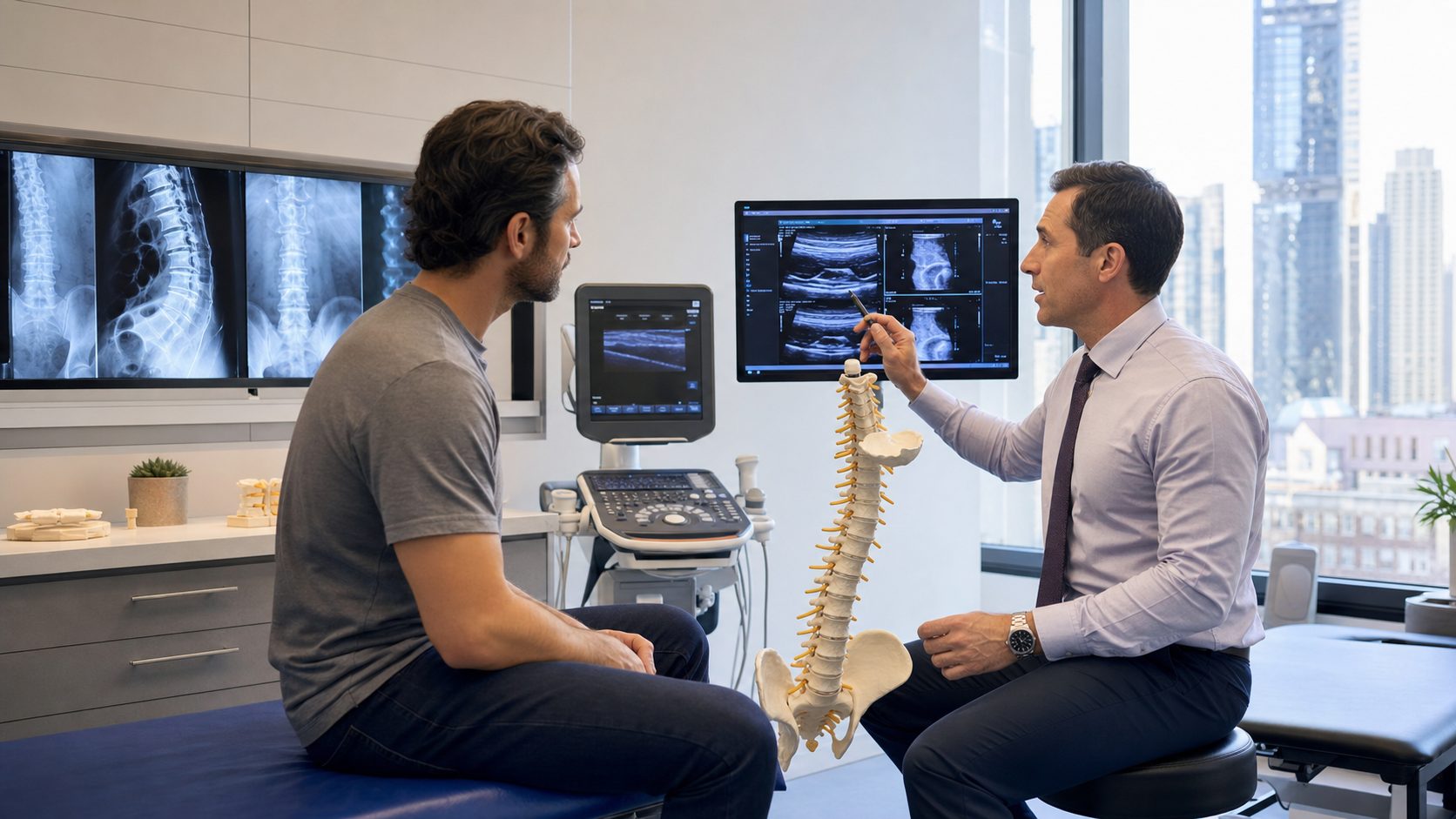
The MSR site describes a state-of-the-art digital X-ray system, diagnostic ultrasound imaging, and neuro-diagnostic testing available on-site. In practical terms, that can reduce the delay between evaluation and decision-making. Instead of guessing whether pain is coming from joint restriction, soft tissue, nerve irritation, or a structural issue that needs a different path, the team can decide whether testing should be part of the first phase of care.

On-site digital X-ray, in our Midtown office.

Therapeutic ultrasound and electrotherapy, used the same visit.
Why Testing Alone Is Not the Treatment
Images and test results do not treat pain by themselves. They are tools for clinical reasoning. A digital X-ray can help assess structure. Ultrasound can support evaluation of selected soft-tissue presentations. NCV and EMG neuro-diagnostic testing can help evaluate certain nerve-related concerns. The real value is what happens next: translating findings into a plan that fits the patient's symptoms, goals, schedule, and risk level.
That matters in Manhattan, where time is often the obstacle. Patients may need morning, lunch, or evening appointment options. They may need to know whether conservative care is reasonable, whether interventional pain management should be discussed, whether physical therapy should lead the plan, or whether SoftWave is a reasonable option for a chronic tendon or joint presentation.
Multidisciplinary Care Means the Plan Can Change
A one-track clinic can only offer one track. MSR's model gives the care team more ways to respond. Chiropractic care may address joint mechanics. Physical therapy can rebuild strength, control, and tolerance. Acupuncture may help with pain modulation, muscle guarding, and recovery. Massage therapy can support soft-tissue mobility. Interventional pain management can be considered when symptoms require a medical pain approach. SoftWave may be used for selected chronic tendon and joint pain cases.
That range matters because pain changes. Early care may focus on calming symptoms and restoring motion. The next phase may focus on strengthening, posture, walking tolerance, desk setup, or training changes. If the pattern does not respond as expected, the diagnostic tools and provider team can help reconsider the plan without sending the patient back to square one.
Two Midtown Locations, One Practical Goal
Manhattan Spine Rehabilitation serves patients from two central offices: Herald Square at 38 West 32nd Street, Suite 501, and Grand Central at 265 Madison Avenue, 2nd Floor. For patients working or commuting through Midtown, that location matters. The easier care is to attend, the easier it is to build consistency.
Consistency is often the difference between temporary relief and a meaningful change in function. A patient with sciatica may need repeated assessment as symptoms centralize or move. A patient with neck pain may need ergonomic changes plus treatment. A patient with chronic tendon pain may need a series of focused visits and a loading plan. The clinic location is not a minor detail; it is part of adherence.
When to Ask About Diagnostics
Ask about on-site diagnostics if your symptoms radiate, include numbness or tingling, do not match a simple muscle strain, keep returning despite care, or affect work, sleep, walking, training, or daily activities. Also ask if you have had prior imaging or tests that never turned into a clear plan.
The best next step is not always the most aggressive one. It is the most informed one. At Manhattan Spine Rehabilitation, diagnostics, hands-on care, rehab, and pain-management options are meant to work together so patients can understand the problem, choose the right path, and move forward with fewer unknowns.
Two Midtown locations near Grand Central and Herald Square.