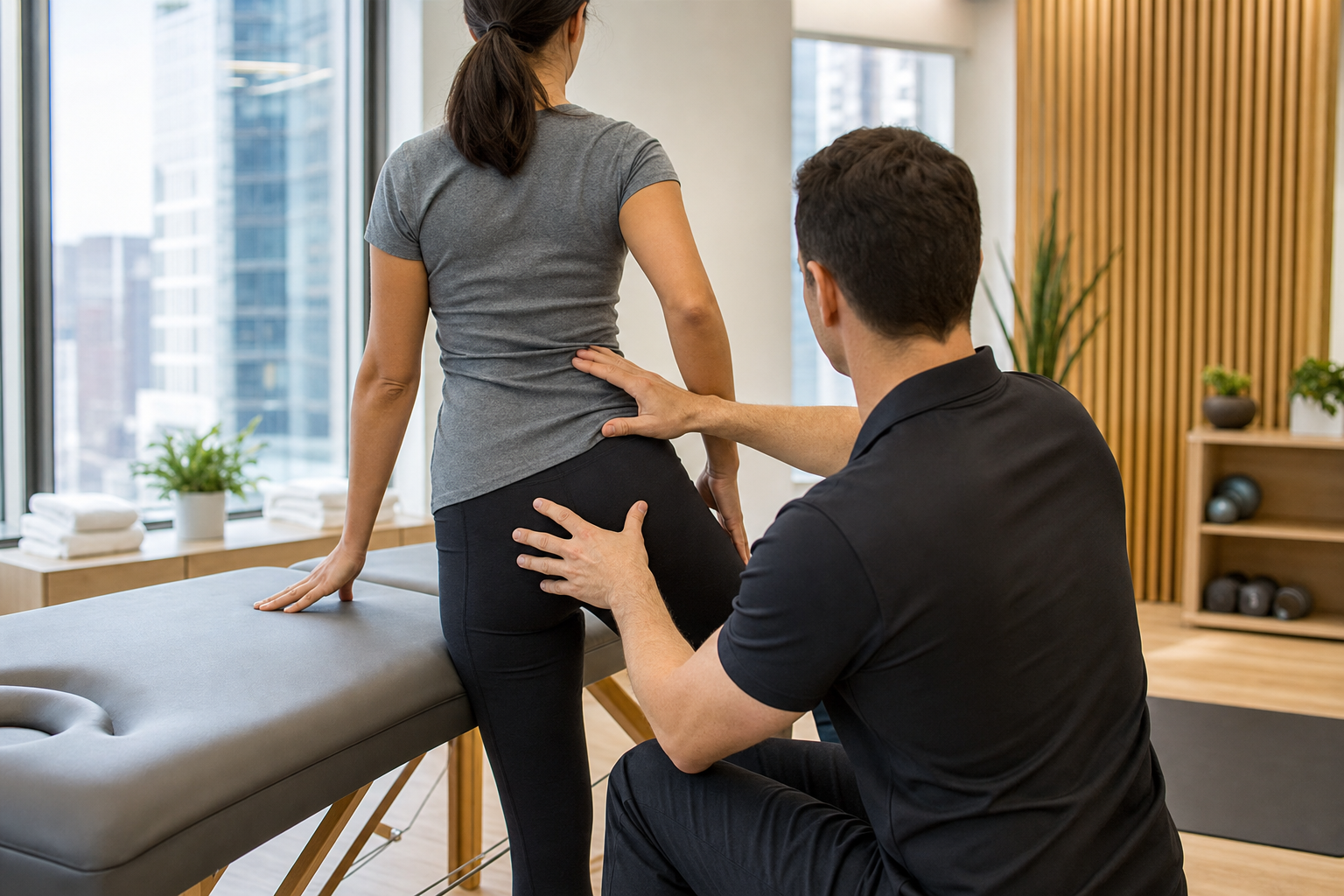
Sciatica Relief Without Surgery in Midtown Manhattan
Manhattan Spine & Rehabilitation • August 13, 2026
Sciatica has a way of taking over your day. The pain shoots from the low back or buttock down the back of the leg, flares when you sit through a long meeting or a subway ride, and makes you brace before you stand up. It sends a lot of New Yorkers straight to worrying about surgery — but for the large majority of people, sciatica responds to conservative care. At Manhattan Spine & Rehabilitation, with two Midtown locations near Grand Central and Herald Square, it is one of the most common problems we treat without an operating room.
What Sciatica Actually Is
Sciatica is not a diagnosis on its own — it is the symptom of an irritated sciatic nerve. That nerve runs from the lower spine through the buttock and down the leg, and when something compresses or irritates it near where it exits the spine, you feel it along that whole path. The most common culprits are a bulging or herniated disc, degenerative changes narrowing the nerve's exit, or tight muscles in the buttock pressing on the nerve. The pain is in the leg, but the source is usually the low back or hip.
Why It Flares With Sitting
Sitting increases pressure on the lumbar discs and keeps the nerve in a shortened, compressed position — which is exactly why desk work, long commutes, and flights make sciatica worse. For Midtown professionals who sit through back-to-back meetings, that daily load is often what keeps a flare going.
How Manhattan Spine Treats It Without Surgery
Care starts by pinpointing where the nerve is actually being irritated, because that determines the plan. From there, our approach draws on the tools under one roof:
- Chiropractic care to restore motion to the spinal joints narrowing the nerve's path.
- Physical therapy to rebuild the core and hip strength that takes pressure off the low back.
- Softwave (acoustic shockwave) to help stubborn, irritated tissue settle.
- Acupuncture and massage therapy to calm the muscle guarding that piles on top of the nerve pain.
The combination matters — sciatica that has both a disc component and tight, guarding muscles rarely resolves by treating just one of them.
When to Be Seen Sooner
Most sciatica improves with conservative care, but some signs mean you should be evaluated promptly: pain with progressive leg weakness, numbness that keeps spreading, or any change in bladder or bowel control (the last is a medical emergency). Short of those, leg pain that has lasted more than a week or two, or that keeps interrupting your work and sleep, is a good reason to get it assessed before it settles in.
Frequently Asked Questions
Do I need surgery for sciatica?
Usually not. The majority of sciatica improves with conservative care that addresses the source of nerve irritation. Surgery is generally reserved for the smaller number of cases with progressive weakness or symptoms that do not respond over time.
Why is my sciatica worse when I sit?
Sitting raises pressure on the lumbar discs and keeps the sciatic nerve compressed and shortened. For people who sit for long stretches at work or on a commute, that position often keeps a flare alive — which is why movement and specific strengthening are part of care.
How long does sciatica take to settle?
A recent flare can calm within a few weeks; a pattern that has run for months usually needs a longer plan to fully unwind. You should see steady markers of progress — how far the pain travels, sitting tolerance, sleep — improving along the way.
Where is Manhattan Spine & Rehabilitation located?
We have two Midtown Manhattan locations, near Herald Square and Grand Central. Call (212) 868-0509 to book.